Generative AI, made clear.
A short, guided read on what generative AI is, how it actually works, and how to use it well at work. This edition is tuned for people who run networks: space, SATCOM, and telco. Start by picking who you are. The reader shapes itself around you: the chapters on the left, and the further reading inside each one.

New to AI? The four words to know.
If terms like "LLM" are still fuzzy, start here. Four words, and how they nest inside each other.
The umbrella: software that does things we'd call "intelligent", recognizing, deciding, generating.
The main way modern AI is built: learn patterns from many examples instead of being hand-coded. Your anomaly-detection and link-failure models are ML.
ML that creates new content, text, images, code, rather than only scoring. The wave behind ChatGPT and Claude.
The kind of generative AI behind chat assistants: a huge model trained on text that predicts the next words.
Getting oriented
Three things worth being clear on: what generative AI is, how it differs from ordinary software, and how to work with it well. Each point links to a fuller source.
What it is
Generative AI is software that creates original content, text, images, or code, in response to a prompt, rather than only classifying or scoring data that already exists (IBM).
How it differs from ordinary software
Traditional software follows fixed rules. A generative model instead produces the most probable response, works within a limited context window (its short-term memory), reflects a fixed training cutoff, and can state a wrong answer with full confidence, a failure mode called hallucination. It is capable, but not authoritative (Anthropic, AI Fluency).
How to work with it well
Anthropic frames effective use as four habits: delegate the right tasks to the model, describe them clearly, apply discernment to the output, and exercise diligence in verifying results and handling data. Andrew Ng's Generative AI for Everyone covers the same ground for a non-technical audience: how the technology works, effective prompting, and where it fits (DeepLearning.AI).
The family tree
"AI" is one word covering very different things. Most aren't competitors, they're circles inside circles.
An LLM is a kind of generative AI, inside deep learning, inside machine learning, inside AI. Two ideas sit slightly apart: agents are a way of using a model, and neurosymbolic AI is a way of combining a model with logic.
Traditional ML model
The workhorse behind prediction. It learns patterns from labeled examples and outputs a number or a category.
Good for: churn, interference, and link-failure scoring, anywhere the answer is a number or a class.
The catch: narrow, needs labeled data, and can't write or explain in language. It scores; it doesn't talk.
Deep learning
Machine learning built from many layers of artificial "neurons." It powers perception, and it's the engine underneath LLMs.
Good for: image and speech recognition, and the modern models built on top of it.
The catch: data-hungry and hard to interpret, a capable black box.
Generative AI
Machine learning that creates new content, text, images, or code, rather than only scoring what already exists.
Good for: drafting, summarizing, and producing first passes.
The catch: it generates the most plausible output, which can be fluent and confidently wrong.
Large Language Model
The language kind of generative AI: a large model that predicts the next words, one at a time, from the context it's given.
Good for: the drafting, summarizing, and question-answering behind chat assistants.
The catch: it hallucinates, and it isn't deterministic, the same prompt can vary. The model itself keeps no memory between sessions; assistants like ChatGPT and Claude now add a memory feature on top, a property of the app, not the model.
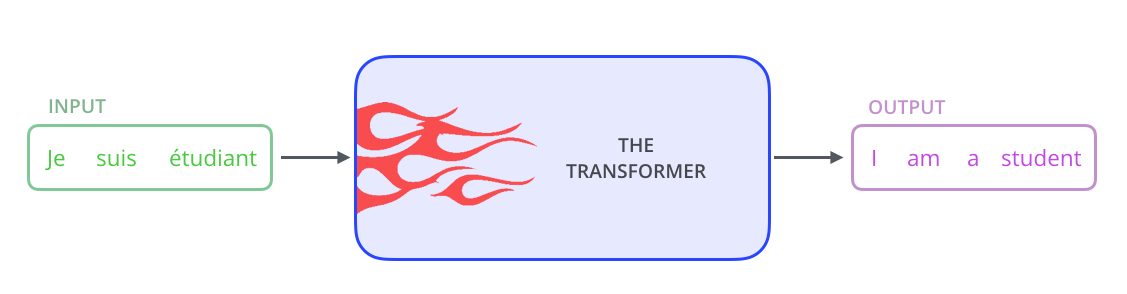
Agents
Not a new kind of model, a system. An LLM running in a loop with tools and a goal, taking several steps on its own.
Good for: multi-step tasks where the path varies and can't be hard-coded.
The catch: it can compound its own mistakes and is harder to control and audit. Earn your way up to it.
Neurosymbolic
The hybrid the field is moving toward: neural pattern-matching combined with symbolic logic, rules, and knowledge graphs.
Good for: reasoning across connected records with rules enforced and an answer you can trace.
The catch: newer and harder to build, but it's where trustworthy enterprise reasoning is heading.
Why neurosymbolic works
An LLM is brilliant at language and useless at guarantees. Classic logic is the opposite. Each is strong where the other is weak.
Pure LLMs can't promise they followed a rule, can't show auditable work, and will state a wrong number confidently. Symbolic AI (logic and rules) is rigorous and explainable, but brittle with messy real-world language. Neurosymbolic AI puts them together. A mental model from Daniel Kahneman: the neural side is "System 1" (fast, intuitive), the symbolic side is "System 2" (slow, deliberate). You want both.
The symbolic side, in practice: ontologies and knowledge graphs
Its most popular modern form is concrete, and increasingly the phrasing you'll hear. An ontology is a shared, formal definition of what things are and how they relate (one meaning for "service," "degraded"). A knowledge graph stores information as entities and explicit relationships (a customer subscribes to a service, which runs over a link). Together they're the symbolic half of neurosymbolic.
Beyond RAG: modeling meaning, not just retrieving text
Basic RAG retrieves passages of text that look relevant. The step past it is to model the meaning: define your terms once (semantics), and store how things relate (a knowledge graph), so a system can reason across connected facts and show the path it took. The harness (the surrounding system that gives a model tools, memory, and guardrails; the Builder focus goes deep on it) is the operational side of the same move, the layer that runs this with memory, tools, and governance instead of a fresh, forgetful chat each time. You don't have to build any of it to see the point: it's why "get the data modeled" tends to beat "buy a smarter model."
Watch these (~10 min each)
Four short, durable explainers. Tap a card to watch. The two channels that have aged best for clear, non-technical AI teaching.

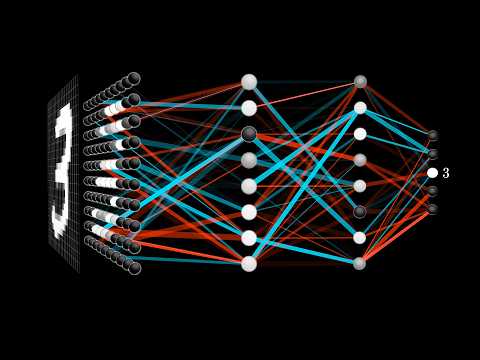

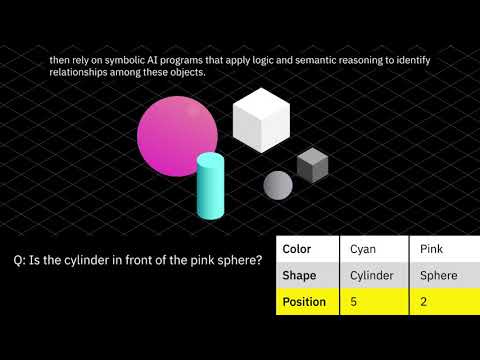
Cards open on YouTube in a new tab.
What GenAI is, in 90 seconds
Read this first. It's the idea everything else builds on.
A generative AI model is like a very well-read new hire on their first day. It has read an enormous amount and writes fluently on almost anything. But it has no memory of your organization, no access to your systems, and it will answer confidently even when it's wrong. A capable mind with no context and no hands.
Everything useful comes from what you add around it: what you tell it (instructions), what you give it to read (your documents), and what you let it do (tools). The model is the engine. The value is the car you build around it.
A power tool for expertise, not a replacement
Before we go further, the honest version: AI is very good at the mechanical parts of knowledge work, and genuinely bad at the parts that are actually your job.
It drafts, summarizes, searches, and takes first passes tirelessly. It does not know your customers, carry your judgment, or hold accountability for a decision. Those stay with you, and in a regulated institution, they have to.
Drafting and rewriting, summarizing long documents, searching across files, first passes, repetitive formatting, explaining jargon.
Judgment, accountability, customer relationships, domain context, reading the room, and the final decision.
We've done this before: the word processor, the spreadsheet
Every generation of knowledge work got a new power tool. The word processor didn't replace writers; it freed them from retyping. The spreadsheet didn't replace accountants; it took over the arithmetic and made their judgment the valuable part. The calculator, email, the search engine, each removed drudgery and raised the value of the thinking on top. Generative AI is the newest tool in that line. It changes the mix of your work; it doesn't erase the reason you're in the seat.
The pattern that wins is consistent: the expert who uses the tool well outperforms both the expert who ignores it and the tool used alone. AI automates tasks, not roles.
What AI is actually good at today
Skip the science fiction. Here's the concrete, unglamorous list of what today's AI does reliably, as long as you give it the input to work from.
Condense long documents, call notes, and email threads. A 40-page procedure into five bullets a field tech can follow.
Customer notices, outage summaries, and plain-language explanations. Turn dense jargon into something a customer understands.
Sentiment, intent, topic, priority. Read the tone of a complaint, or triage inbound messages to the right team.
Pull names, dates, amounts, and clauses out of messy forms and contracts into clean fields.
OCR: turn scanned forms and PDFs into text and data. Speech-to-text: turn calls and meetings into transcripts.
Grounded Q&A and semantic search: find and answer from your actual policies by meaning, not just keywords.
Also dependable, with a human reviewing: writing and checking code and spreadsheet formulas, drafting data cleanups, and brainstorming outlines, checklists, and options.
Where it still needs a human
The other half of no-hype: the tasks today's AI is unreliable at, or shouldn't do alone. Knowing these keeps you out of trouble.
| Don't rely on it for… | Why | Do this instead |
|---|---|---|
| Exact math & totals | it predicts text, it doesn't calculate | give it a calculator/tool, or check the number |
| Facts without a source | it can invent confident, wrong answers | ground it in your documents |
| Current / real-time info | its training has a cutoff date | use tools that retrieve live data |
| Guaranteeing a rule or compliance outcome | it offers no hard guarantees | enforce with rules and a human sign-off |
| Reasoning across all your messy data | still the frontier (neurosymbolic) | knowledge graphs + human oversight |
| A final, accountable decision | accountability is a human thing | keep a person on the call |
How people actually use it today
The same model shows up in very different places. These are the main ways people work with AI now, from a chat box to your desktop to a developer's editor.
Claude, ChatGPT, Gemini. Ask, draft, summarize, rewrite. The front door for everyone, no setup.
Claude on the desktop. It reads a folder, writes documents, runs analysis, and uses Skills (saved playbooks) and connectors (Slack, Notion). It does the work, not just talk about it. This guide was built this way.
Copilots in Microsoft 365, Google Workspace, and your CRM. AI shows up where you already work.
Cursor (an AI-native editor), Claude Code (agentic coding in the terminal), GitHub Copilot. For people who write code; the AI writes, edits, and runs it.
LangChain / LangGraph and the Claude Agent SDK, wired to your systems over MCP. For teams building their own automations on top of a model.
Pick your focus
The concepts don't change. What changes is the question you're trying to answer. Jump to yours, or read all three.
You're the expert. This is your assistant.
Think of AI as a sharp, tireless assistant who drafts and fetches, while you stay the one who checks and decides.
You've spent years learning how network operations, mission planning, compliance, or customer service actually work. None of that is being handed away. The goal of this focus is narrow and practical: make the expertise you already have go further, and faster, by letting a capable assistant handle the parts that don't need you.
You don't need to be technical. You need a clear picture of what the tool is good and bad at, the kinds of work you can hand it, and how to tell when it's genuinely helping. That's the whole focus.
Here's the path we'll walk
- Four concepts, simply. What the tool actually is, so it stops feeling like magic.
- Three kinds of work. Chat, coworking across your documents, and code, from easiest to most powerful.
- The moving parts. What's happening under the hood, and what to keep an eye on.
- What "success" looks like, so you know when it's working and when to stop and check.
Four concepts, explained simply
You don't need to know how an engine is built to drive well. You do need these four ideas.
1. A very well-read intern, not a search engine
It generates the most likely next words from what it read in training. It's not looking up a fact. That's why it's brilliant at drafting and can also be confidently wrong. Think "smart intern who read everything," not "Google."
2. Its memory is a desk, not a filing cabinet
It can only "see" a limited amount at once (the context window). Like a desk: only so much fits, and it's cleared each session. Newer assistants can carry saved notes between sessions (a memory feature of the app, not the model), but the desk itself still empties, which is why giving it the right document matters. You're loading the desk.
3. It will guess, so you verify
Because it produces the most plausible answer, it will sometimes invent a citation or a number with total confidence. This is hallucination, and it's a property of the technology, not a switch you can flip (IBM explains why). Treat every answer as a draft to check.
4. Ground it, and it stops guessing
The fix is grounding: give it the real source and ask it to answer from that. Now the answer is specific, current, and traceable to a document you can point to.
Check yourself: the AI gives a confident answer on whether an outage breached an SLA. What do you do?
Writing a good prompt
The single most useful skill, and the one this track keeps pointing back to. A strong prompt usually has four parts.
| Part | What it does | Example |
|---|---|---|
| Role | who it should act as | "You are a compliance analyst." |
| Context | the material and the situation | "Here is our outage-credit policy: [paste]." |
| Task | what to produce | "Summarize it in five bullets a new NOC operator can follow." |
| Format | length, structure, audience | "Plain language; flag anything about ID verification." |
When you can, add one example of a good answer. Showing beats describing.
Same task, weak vs. strong
"Summarize this policy." No role, no audience, no format, so you get a generic summary you still have to rework.
"You are a compliance analyst. Summarize this outage-credit policy in five bullets a new NOC operator can follow, in plain language, and flag anything about identity verification." Usable on the first try.
Check yourself: you need a customer notice explaining a service credit after an outage. What makes the prompt strong?
Three kinds of work: chat → docs → code
As you get comfortable, the work climbs a ladder. Each rung gives the AI more to work with, and asks for more care.
Rung 1, Chat. You type, it answers. Draft a letter, summarize a call note, rewrite in plainer language. Fast, low-risk, best place to build fluency.
Rung 2, Cowork across documents. You bring your material, policies, a contract, notes, and work over it: "compare these disclosures and list what changed." The biggest day-to-day lift. Under the hood this is retrieval-augmented generation (RAG) (IBM explainer).

Rung 3, Code & actions. It writes and runs code or uses tools to take steps: crunch a spreadsheet, pull from a system, file a ticket. You describe the outcome; it does the mechanical work. This is where real automation lives, and where oversight matters most.
The moving parts
Every AI interaction is the same handful of parts. Climbing the ladder just switches on more of them.
| Part | Chat | Docs | Code |
|---|---|---|---|
| Your instructions | on | on | on |
| The model | on | on | on |
| Your documents | — | on | on |
| Tools & actions | — | — | on |
| Memory (across sessions) | opt | opt | often |
| Your verification | on | on | on |
So what does "AI success" mean?
Most people get this backwards. Success isn't a smarter model. It's the right context, grounded in the right data, with a human verifying.
Creating value with AI, safely
Your question: where do we invest, what do we build, and how do we keep it governed? Four ideas carry most of the weight.
1. The model is the engine, not the car
Standardize on one model now, but keep the freedom to swap. That comes from design: put prompts, memory, grounding, tools, and rules in a layer above the model (the harness), and connect through the open MCP standard. Then "change the model" is a config change, not a rebuild.
2. Workflows before agents
A workflow follows steps you designed; an agent decides its own. Workflows are predictable, cheap, auditable. Use the simplest thing that works, keep humans in the loop for customer-facing work, and earn your way up to autonomy.
3. The data foundation is the real bet
Basic "chat with your documents" disappoints on the questions that connect facts across systems. The durable advantage is a governed, relationship-aware view of your data, consistent definitions and the relationships between accounts, products, and interactions. The model keeps changing; clean, connected data compounds.
4. Governance is the price of admission
Nobody hands operators an AI rulebook either: you answer through the frameworks you already know, FCC outage reporting, CPNI rules on customer data, export control (ITAR/EAR) on satellite technical data, and CMMC where defense work touches the network. Audit trails, validation history, version control, and executive ownership are how you show your work under those frameworks. Build observability and guardrails in from day one; you can't bolt an audit trail onto a system that wasn't built for one.
Check yourself: a demo answers your document questions flawlessly. What's the one question to ask?

The data foundation is the moat
The unglamorous work that decides whether AI holds up: defining what your data means, once, so every system and every agent can reuse it. It rarely ships a feature this sprint, which is exactly why it gets skipped.
Define it once, or define it eight times
Without shared definitions, every team, and every AI use case, ends up defining "service," "available," and "degraded" a little differently. Do the semantic work once, as agreed definitions and a knowledge graph of how things relate, and every consumer, agents included, plugs into the same foundation instead of building its own version of reality.
Semantic debt
Skipping the definitions is like technical debt, except it doesn't appear on any roadmap. It surfaces later, when a second team tries to reuse what you built, or when an agent gets a question nobody anticipated and has no structure to reason with. Data quality then becomes a cleanup project instead of something built in.
Someone has to own it
Because it cuts across every team, the semantic layer easily becomes a shared responsibility that belongs to no one. It needs a clear, accountable owner for that roadmap, not a backlog nice-to-have that each team quietly reinvents in its own corner.
Where AI projects fail
The model is almost never the reason. Projects stall in the layers below: on data nobody connected, meaning nobody modeled, and decisions nobody owned.
The 2025 numbers were blunt. MIT's Project NANDA found 95% of enterprise GenAI pilots showed no measurable P&L return. S&P Global found 42% of companies abandoned most of their AI initiatives, up from 17% a year earlier. Gartner predicts 60% of AI projects that lack AI-ready data will be abandoned through 2026 (a separate prediction from Gartner's MCP-without-semantics figure in the companion reader; several 60%s circulate, keep them apart). Different studies, same diagnosis: these are foundation failures, not model failures.
The four jobs below the model, and how each one fails
(The companion reader's five verbs, describe, link, model, infer, decide, are the same picture: retrieval leans on described data, and infer sits between model and decide, where the reasoning engines in the table below live.)
1. Retrieve
A chat interface on a raw model answers from training memory: fluent, confident, and ungrounded. Retrieval (RAG) fixes the worst of it by handing the model your documents. But retrieval alone stops at "find text that looks similar." It cannot connect facts across systems.
2. Link
The systems get connected, the data flows, the demo works. This is where most stacks stop, and where the subtle failures start: linked is not modeled. Each source still defines "service," "available," and "degraded" a little differently, so a cross-system question comes back wrong, with citations. The pipes carry data; they carry no meaning.
3. Model
Shared meaning: definitions agreed once (an ontology) and relationships stored explicitly (a knowledge graph). This is the layer that gives agents and reasoning engines something real to reason over, and it is the layer the failed-pilot statistics point at. Skip it and every use case re-invents its own version of reality; build it without an owner and it quietly drifts.
4. Decide
The point of the whole stack: a decision a person makes and the organization owns, with lineage an auditor can follow. It is the least crowded seat in the market: Palantir sells it as a closed platform; DataOS sells it open and owned by the customer (the table below, and the disclosure with it). If a pilot produces insight but changes no decision anyone is accountable for, it demos well and changes nothing.
The landscape, honestly
Each layer below is real, useful, and routinely oversold as the whole answer. The right question for any tool is which job it does, and what it still needs above it.
| Layer | What it does | What it can't do alone |
|---|---|---|
| Data catalog Collibra, Atlan | Describes what data means and where it lives | A glossary describes; it doesn't answer questions or make calls |
| Pipelines & fabric Fivetran, streaming fabrics | Move and link data across systems | Linked is not modeled; a connection carries no meaning |
| Semantic layer & knowledge graph dbt, Neo4j, GraphDB | Model what things mean and how they relate | A model nobody governs drifts, and meaning is still not a decision |
| Reasoning engine Prometheux, Stardog | Infers new facts by applying rules over the graph | Inference is only as good as the modeled meaning beneath it |
| Agent harness Claude Agent SDK, LangGraph, LlamaIndex | Runs the loop: tools, memory, guardrails | On ungrounded data it automates guesswork, faster |
| Evals & observability LangSmith, Arize, your own eval set | Prove behavior and catch drift | Measurement can't supply meaning |
| DataOS The Modern Data Company | The operating system above them: grounds in your catalog, models meaning as governed, ontology-registered data products, and runs agents and inference partners on top | The decision stays human; DataOS exists so the person making it works from governed meaning, and the call is owned, auditable, and compounds |
Check yourself: a vendor demo answers cross-system questions perfectly. Which job is it actually doing?
The model zoo: which model, and whose?
"AI model" isn't one thing. Models come in different sizes and shapes, and you can rent them or run your own. Matching the model to the task is where a lot of cost, speed, and privacy is won or lost.
By size and shape
The big generalist. Best at hard reasoning, drafting, and open-ended Q&A. Most capable, most expensive per use. Your default for complex language work.
A frontier model that "thinks" in steps before answering (GPT-5 thinking, Claude with extended thinking, Gemini thinking). Markedly better where a wrong intermediate step ruins the answer; slower and much pricier per call. The classic cost mistake is routing everything through one.
Compact and fast (millions to a few billion parameters). Great for narrow, high-volume jobs: classify, extract, route. Cheap, low-latency, and can run privately or even on a laptop or branch server. Examples: Phi, Gemma, Ministral.
Understands images and text together. For reading documents, site surveys, filings, screenshots, and charts. The engine behind smart document processing. Frontier models read images natively; a dedicated VLM matters when you run your own.
The quiet workhorse. Turns text into vectors so you can search by meaning. Small and cheap; it's what powers "answer from your documents" (RAG).
By ownership: rent the frontier, or run your own
Anthropic, OpenAI, Google. The most capable models, easiest to start, pay-per-use API. Data leaves your perimeter (mitigated by enterprise no-training terms). Fast to adopt; cost scales with usage; some vendor dependency.
gpt-oss, Qwen, Llama, Mistral, Gemma, Phi. Run in your own cloud/VPC, on-prem, or at the edge. Data stays in your control; fixed infrastructure cost, no per-token fee. You own the operations, and the best open models still trail the frontier on the hardest tasks.
Reading the leaderboards
Three kinds of scoreboard, measuring three different things. Arena ranks models by blind, head-to-head human preference votes. Artificial Analysis charts measured quality against speed and price, hosted and open-weight side by side. LiveBench refreshes its questions monthly so models can't have memorized the answers, and SWE-bench tests whether a model can resolve real GitHub issues end to end. Links below.
Inference, edge, and choosing per task
Two words you'll keep hearing, then a simple guide to which model to reach for.
Inference
Running a trained model to get an answer, as opposed to training it in the first place. This is where your ongoing cost and speed live: every request is an inference, and volume times model size drives both the bill and the latency. Bigger model = smarter but slower and pricier per call.
Edge AI
Running a model close to where the data is, on a branch server, a laptop, a kiosk, instead of sending it to a data center. Small models (SLMs and VLMs) make this practical. The wins: privacy (data never leaves the device), low latency (no round trip), and it works offline.
When to reach for what
| The job | Reach for |
|---|---|
| Hard reasoning, drafting, operator Q&A over procedures | Hosted frontier LLM (Claude / GPT / Gemini) |
| High-volume classify / extract / route, cost- or latency-sensitive | SLM (often self-hosted) |
| Reading documents, site surveys, filings (images) | VLM |
| Sensitive data that can't leave, or offline / branch use | Local open-weight model in your VPC or on-device |
| Search over your own documents (RAG) | Embedding model + an LLM |
Harnesses at the edge
If you're going to run AI on your own turf, for privacy, latency, or examiner comfort, the durable design is a layered stack where the data stays inside your perimeter and every layer is swappable.
The core question for a network operator isn't "which model is smartest." It's "where does the data go, and can I prove it never left." Every choice below flows from that one constraint. Treat the layers as durable and the specific tools as replaceable.
The three durable rules
Small-model-first, with a policy gate. A cheap local model handles the bulk of the work; only genuinely hard reasoning escalates to a frontier model, and the gateway is where you enforce which classes of data may never cross that line.
Prototype simple, ship for load. Running a model on a single box is fine to prototype. Anything customer-facing needs a production inference server that handles many requests at once.
Log at the gateway and the harness. That log, every prompt, response, and tool action, is your audit trail. In a regulated shop it's not optional, and it's far easier to build in than to add later.
The edge toolkit
The real, current tools for each layer. The names will change; the layers won't. This is a map, not a mandate.
Ollama / LM Studio for prototyping and single-user tools; vLLM / SGLang for production load; NVIDIA NIM for a vendor-supported, air-gap-capable box. (llama.cpp / GGUF runs underneath.)
LiteLLM is the common self-hosted, OpenAI-compatible gateway: routing, failover, budgets, virtual keys, and central logging in one choke point.
NeMo Guardrails, Guardrails AI, and Llama Guard: redact PII on the way in, classify and filter on the way out, log both.
pgvector if you already run Postgres; Qdrant if you don't; Milvus/Weaviate for large scale; Chroma for prototyping. Retrieval stays in-perimeter.
Orchestration/harness frameworks that tie it together: the Claude Agent SDK, LangChain, and LlamaIndex, with tools exposed over MCP.
Open-source models for network operators
In 2026 you can build a credible on-prem stack without ever calling a frontier API. For an operator with classified enclaves, export-controlled data, or sovereign customers, the license and the deployment story usually matter more than the last benchmark point.
The most deliberately enterprise-positioned open family, trained on curated business data and paired with safety and governance tooling. Best for "open, but with an accountable vendor and a lineage story."
Llama 3.x 8B/70B is still the installed-base workhorse with the biggest fine-tuning ecosystem; Llama 4 is the current, natively multimodal generation. License is permissive-but-not-Apache, so have counsel confirm terms.
Mistral and Qwen (Apache 2.0) are clean, efficient choices; Qwen's vision variants are excellent at documents. Phi (MIT) is tiny and cheap for extraction. Gemma is capable under a custom Google license. OpenAI's gpt-oss (Apache 2.0, 20B/120B) is a mainstream on-prem option, the 120B runs on a single 80GB GPU. DeepSeek (MIT) is highly capable, but its Chinese origin draws US scrutiny; most operators with government customers pass. The small variants (Phi, Qwen, Gemma) also run at the disconnected edge, remote sites and teleports included.
There is no dominant open "TelcoGPT." The working pattern is LoRA recipes on open bases over your own corpora: tickets, runbooks, M&C logs, alarm narratives. NVIDIA's telco reference work and Hugging Face task models are the useful starting points.
The expensive mistake: fine-tuning to teach facts
Fine-tuning changes a model's behavior, its output format, vocabulary, and tone. It does not reliably store facts, and the model tends to forget what it knew. So don't fine-tune to inject your policies. Put changing facts in RAG, where they're grounded, current, and citable, and where your data stays on-prem.
Reach for LoRA / QLoRA when you need a consistent output format at scale (say, structured incident-report JSON) or a house voice that prompting can't hold. QLoRA tunes an 8B–70B model on modest local GPUs, and tuning locally is itself a privacy control. The 2026 sweet spot: a QLoRA-tuned open model with RAG on top; a few thousand good examples plus retrieval captures most of the value.
SATCOM & telco workflows, and the governance around them
The point of all this is the work. Here's the use-case catalog with the model and pattern for each, and the governance that keeps it audit-ready.
| Use case | Model + pattern | Human? |
|---|---|---|
| Document intake (site surveys, vendor manuals, filings) | Local VLM · IDP extraction | review exceptions |
| Ticket triage + enrichment (topology, history) | Local SLM · RAG + agent | yes (escalations) |
| Incident / outage narrative | Local SLM · summarize (detection = ML) | yes |
| Post-incident review / RCA draft | Fine-tuned SLM + RAG | human decides |
| SLA-breach explanation phrasing | Local SLM · phrases a deterministic calculation | yes |
| Customer service / agent-assist | Local SLM · RAG + next-best-action | rep in loop |
| Runbook & procedure Q&A | Local SLM · RAG with citations | optional |
| Shift-handover & call summarization | Local SLM · summarize | light review |
Rule of thumb: default to a local small model; escalate to a frontier model only for open-ended reasoning or messy multi-document synthesis. Every consequential decision keeps a human committer.
Governance you can't skip
Change control and determinism. Network teams do not let probabilistic systems touch the network, and they are right. The working split: LLMs read, draft, summarize, and phrase; anything that acts on the network stays deterministic, versioned, and auditable. Treat your AI systems as governed models all the same, with validation, monitoring, version pinning, and a retrievable decision record for anything that influenced an operational call.
The regulatory frame. There is no single AI rulebook for operators; the obligations arrive through the frameworks you already answer to. FCC outage reporting (NORS/DIRS) demands accurate, timely incident records, which is exactly where sloppy AI summaries become filings. CPNI rules govern what customer network data may feed which tools. ITAR/EAR make satellite technical data export-controlled: an uncontrolled AI tool is an export waiting to happen. CMMC applies where defense work touches the estate. A written AI policy and a retrievable decision record cover most of it.
Sovereignty note. Government and defense customers increasingly require on-prem, sovereign, or air-gapped inference, and European buyers add EU AI Act expectations. Decide your deployment tiers early (cloud, on-prem, disconnected edge); retrofitting an architecture for an enclave is far more expensive than planning one.
What a small team can build
You do not need a data science department. At a regional operator, a teleport, or a NOC, most of what follows is within reach of two to five people, a governed data foundation, and a quarter of focused work.
The classics: still the highest ROI
These are traditional ML from the family tree, not generative AI, and they remain the workhorses. Each one turns operational data you already hold into a ranked list someone can act on.
Score enterprise customers on usage, ticket, and engagement signals before they leave, so retention outreach works a ranked list instead of a hunch. Needs two or three years of service history and one agreed definition of "active."
Cluster on service mix, usage, and support behavior. Marketing stops sending one message to everyone, and each segment gets an offer that fits how they actually use the network.
Likelihood scores for the capacity upgrade, the redundancy add-on, the managed-service tier. Sales and success teams work from the same ranked view instead of competing scripts.
Flag drifting link margins, error-rate creep, and unusual telemetry patterns early enough for a maintenance window, not an outage post-mortem. A simple model on telemetry you already collect goes a long way.
Generative AI on top
Every pattern here is one you have already met in this reader, applied to the work of an operations team. The first two are the classic first wins.
The grounded assistant, over your own policies and procedures. Staff ask in plain language and get an answer with the source paragraph attached, instead of hunting PDFs. The standard first GenAI project: low risk, visible daily value.
Transcribe calls, summarize them, classify intent and sentiment with a small local model. Complaint themes surface weekly instead of anecdotally, and every call gets a note without the rep typing one.
Site surveys, vendor manuals, and license filings read by a vision model into clean fields, with humans reviewing the exceptions rather than keying everything. The unglamorous win that frees the most hours.
Outage notices, credit explanations, and plain-language rewrites, drafted by the model and signed by a person. The automation rule from the governance page applies in full: the model phrases, it never decides.
Retrieval plus a suggested next step inside the rep's screen. The rep stays in the loop and on the call; the assistant just removes the searching.
Check yourself: churn model or shared definitions, which comes first?
Accelerating the work, honestly
The first thing to be clear about: generative AI changes the work around your model, not the model itself.
Take churn. A gradient-boosted or survival model on good features still beats asking an LLM "who's going to churn." What LLMs change is the surrounding work: exploratory analysis, drafting and documenting feature engineering, generating and reviewing code, explaining output for a business audience, turning a vague request into a testable spec. Treat the model as a fast, occasionally wrong analyst beside you, not the algorithm.
Two pages follow: where AI actually fits in your pipeline, and the one thing that quietly decides whether any of it works.
Where it fits in your pipeline
A data-science project is a pipeline. AI speeds up specific stations, and you verify at each one.
Profiling a table, proposing hypotheses, drafting the first pass of a notebook.
Generating transformations, and reviewing yours for bugs and edge cases.
Turning model output into plain language for a business owner, caveats intact.
Letting an agent iterate on a query, with evals and a human check on the conclusions.
Where you let an agent iterate, keep evals and a human check on the conclusions, not just the code. Fast and wrong is still wrong.
Check yourself: AI writes a whole transformation in seconds. What comes next?
The data still decides it
The thing that decides success has nothing to do with which LLM you pick. It's the data.
Churn is a relationship problem: risk lives in the connections across services, sites, tickets, telemetry, and billing history, and each source defines "service" and "active" a little differently. Reconcile those definitions and the modeling is easy. Skip it and inconsistent features break the project quietly, especially when a feature is computed one way in training and another way in production.
This is your stake in the Builder's semantic layer. The same governed definitions that make an agent's answer defensible to an auditor are the ones that keep "availability" computed the same way everywhere your features are built.
Check yourself: an LLM writes a clean churn feature in seconds. What's the risk?
Space & SATCOM in 2026: everything multiplied
Every headline trend in the satellite business has the same second-order effect: more networks, more vendors, more definitions of the same thing.
SES runs 120 satellites across GEO and MEO after closing Intelsat; Eutelsat pairs GEO with OneWeb's LEO fleet; Viasat folded in Inmarsat. But single-terminal multi-orbit is still rare, so the working pattern is two terminals, two SLAs, and two NOC relationships per site.
T-Mobile's Starlink-powered T-Satellite launched July 2025 in the US, and Starlink direct-to-cell now reaches 22 countries through partner carriers; AST SpaceMobile has 25+ carrier partners; Amazon agreed to buy Globalstar (~$11B, expected to close 2027), after which Apple's satellite features move to Amazon's Leo network. Ordinary phones now roam onto space networks.
Software-defined satellites (Airbus OneSat) change their beams and coverage in orbit, so ground systems (Kratos OpenSpace) virtualized to keep up. Microsoft retired its own ground stations; the ecosystem consolidated around specialists. Capacity became a fast-moving, perishable inventory.
The Space Development Agency awarded ~$1.75B in July 2026 for accelerated missile-tracking satellites supporting Golden Dome, on top of a proliferated-LEO architecture spanning several vendors' buses. Multi-vendor constellation operations are now the defense-space norm.

Telco in 2026: AI budgets up, autonomy stuck
Telcos are spending on AI faster than almost any industry, and the constraint they keep hitting is the one this reader keeps naming.
89% of telcos are increasing AI budgets, and network automation has overtaken customer experience as the top AI investment. Documented AIOps deployments show 20-40% NOC cost reductions. Top-quartile AI adopters run 4-7 points higher EBITDA margins than the median.
On TM Forum's autonomy scale, only ~4% of operators have reached Level 4 overall; the rest of the progress is confined to single domains. The blocker between "AI recommends" and "network runs itself" is cross-domain shared meaning: RAN, transport, core, and IT each describe reality differently, and a closed loop can't reason over four dialects.
Amdocs (aOS), Netcracker, and ServiceNow now sell agent layers that ride on top of any vendor's stack, an admission that the stack itself won't be replaced. Every one of those agents assumes clean, semantically consistent network data underneath. Few operators have it.
Zayo closed its $4.25B purchase of Crown Castle's fiber (May 2026), inheriting incompatible inventories and monitoring systems. Meanwhile 275+ operator-satellite partnerships make the satellite link one more leg of the terrestrial network, one that telco systems have no native data model for.

Where AI actually lands in these markets, and why pilots stall
The honest scorecard, mid-2026.
Working today, in production
Classic ML on telemetry, at constellation and network scale. Predictive maintenance is the single biggest AI revenue slice in aerospace.
Beam and bandwidth allocation in SATCOM; RAN energy and capacity tuning in telco. T-Mobile ran 30,000 automated antenna adjustments through one winter storm.
Event correlation, auto-triage, and closed-loop remediation where the domain is well-instrumented. The documented NOC cost reductions live here.
Care assistants, churn models, call summarization, now second to network automation in investment priority.
Why the rest stalls
Nearly every operator has adopted AI somewhere, and the initiatives stall before production scale for the same reason across studies: data debt. Fragmented OSS/BSS/CRM gives agents conflicting inputs. Per-vendor element managers hold telemetry in proprietary schemas. SATCOM telemetry is largely unlabeled, so supervised learning starves. The pilot saw one clean domain; production spans five messy ones.
The open seat: between the NOC and the P&L
Map the vendors who serve these markets and a gap appears in the middle.
| Layer | Who sells it | Where it stops |
|---|---|---|
| NetOps / M&C tooling | Skyline DataMiner, Kratos OpenSpace, Cisco Crosswork, Blue Planet, CodeMettle | Sees devices, links, services. Alarms don't know what they cost. |
| OSS/BSS + agent layers | Amdocs aOS, Netcracker, ServiceNow TSM | Assumes someone else delivers clean, consistent network data. |
| Decisioning platforms | Palantir | Deep in defense space; thin at the commercial NOC edge, priced for primes. |
The unclaimed middle is the governed layer that links operational telemetry to business meaning: service-to-revenue linkage, SLA-to-contract reconciliation, capacity-as-inventory, fleet-health-to-capex. The NetOps layer can see everything and can't say what any of it means in business terms; the business layer knows the contracts and can't see the network.

How the CodeMettle + DataOS pairing answers it
CodeMettle puts the whole multi-vendor estate, edge to enterprise, on one operating surface with deterministic automation a NOC can trust. DataOS sits above that surface and gives the data crossing it shared meaning: named intelligence products like Multi-Platform Service Assurance, Revenue Assurance, Ground Station 360, and Spectrum & Capacity Intelligence, live in weeks on the systems the operator already runs, and theirs to keep. Different layer, different buyer, no overlap.
The library
The explainers, lectures, courses, and papers behind every concept in this reader, organized so you can go as deep as you want on any of them.
One foundation, three focus areas
The domain expert learns to use it well. The builder learns to deploy it safely. The analyst learns to accelerate honestly. All three depend on the same thing.
The model at the center keeps changing, and it will keep getting better. What compounds underneath every focus is the same: clear inputs, grounding in trustworthy data, and a human accountable for the result. Get those right and the technology serves the work. Get them wrong and no model will save you.
If the path in this reader clicked, here is the same path written for practitioners by Modern Data 101, the publication from the team behind DataOS: from the systems you run, to governed data products, to modeled meaning, to AI on top.
What this looks like in practice
Two deployments, the same pattern each time: ground in the systems already running, model the meaning once, govern it, and only then put AI on top. Both run on DataOS, the platform behind this reader.
Accelerated its GenAI timeline by 80% with DataOS, delivering predictive maintenance and quality optimization across 150M+ devices, in weeks instead of years. (Published case study: "80% Faster to GenAI with DataOS.")
Revenue Assurance on governed data products took SLA-credit discovery from a 30–60 day reconciliation lag to real time, and surfaced inconsistencies in 14% of customer-SLA mappings that had been quietly mispricing credits. NOC, CRM, and ERP all stayed exactly where they were.
None of these started with a model. Each started on the data foundation, and the AI came fast afterward. That is the whole argument of this reader, running in production.